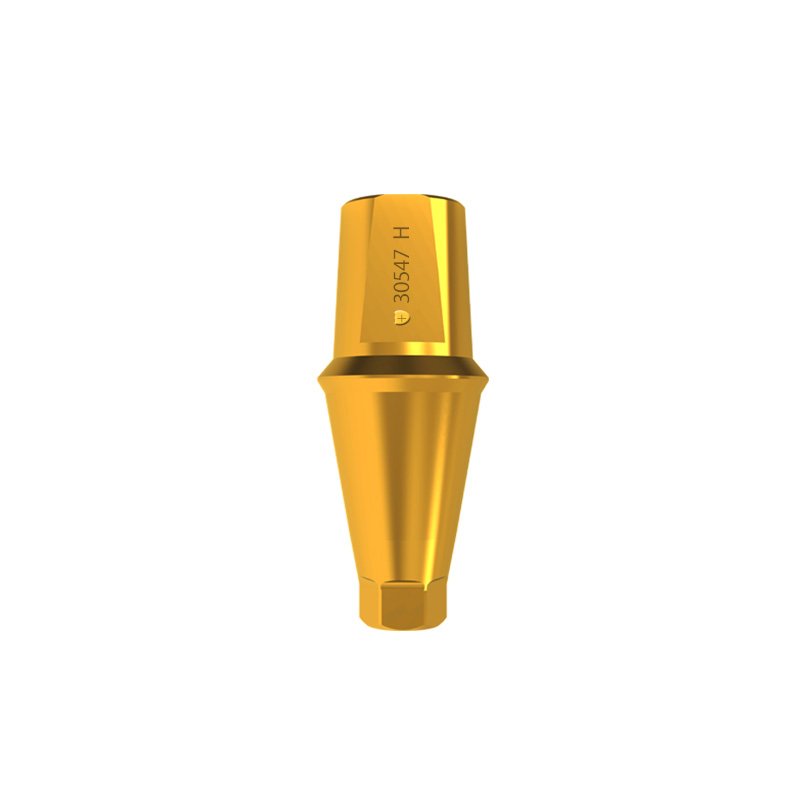
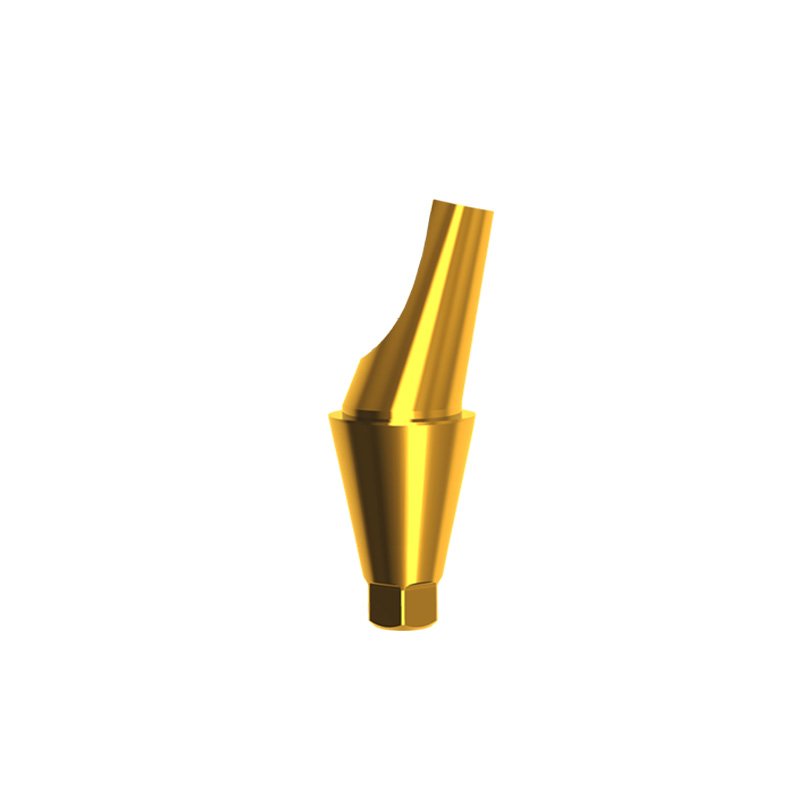
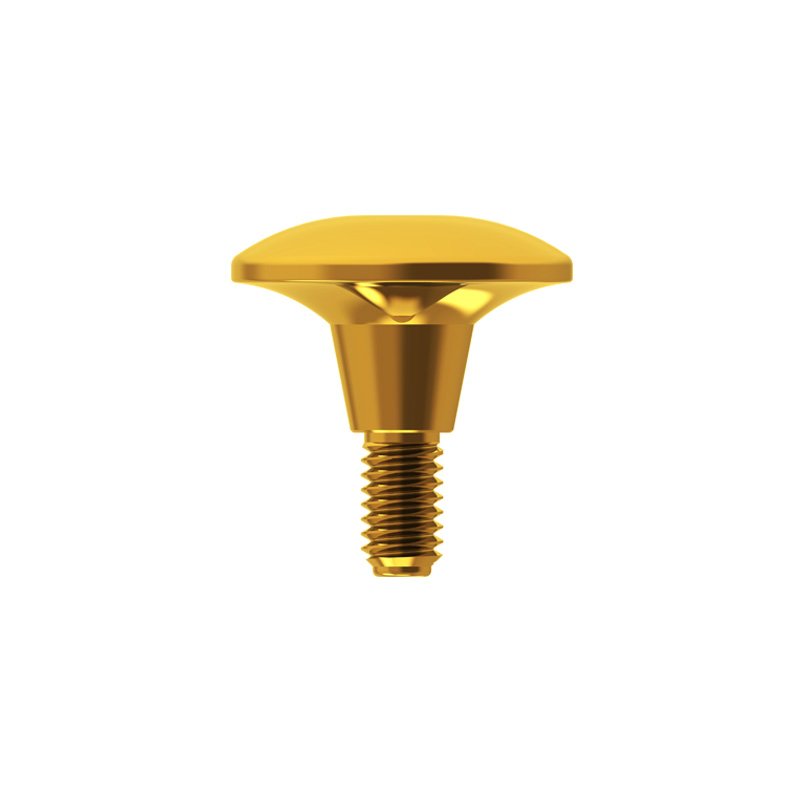
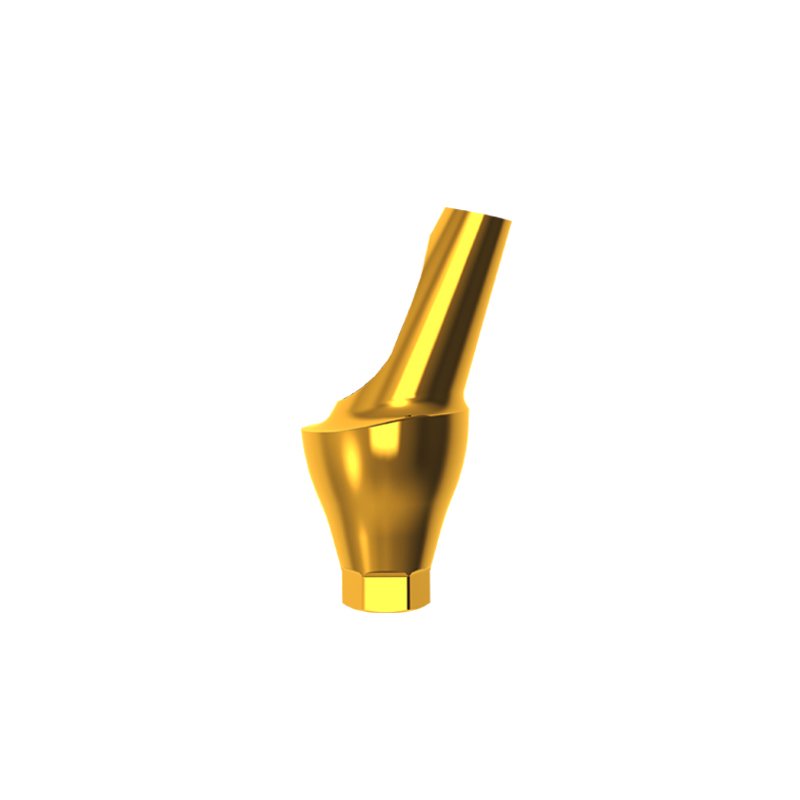
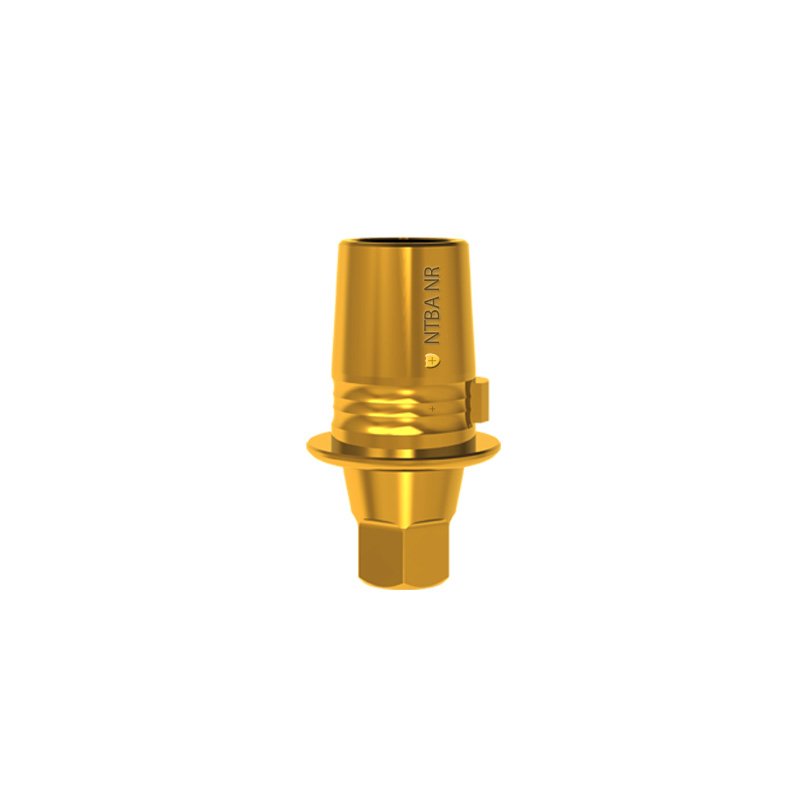
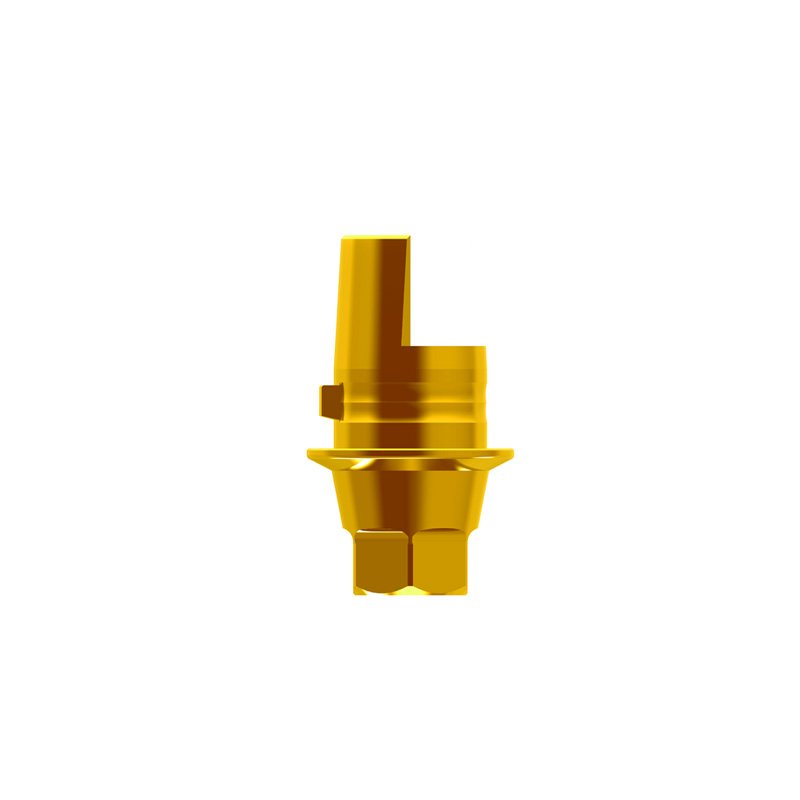
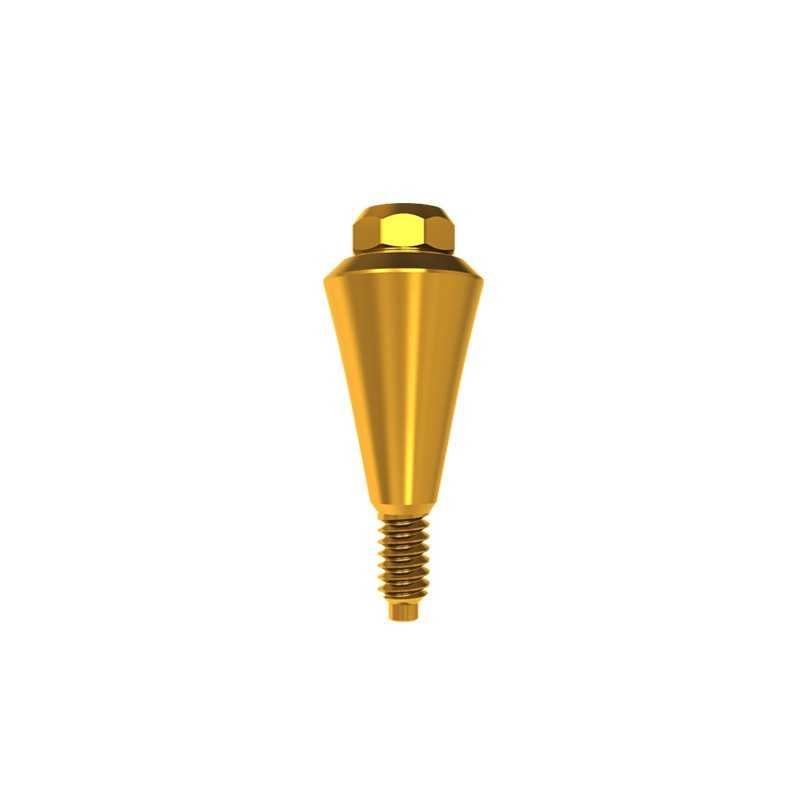
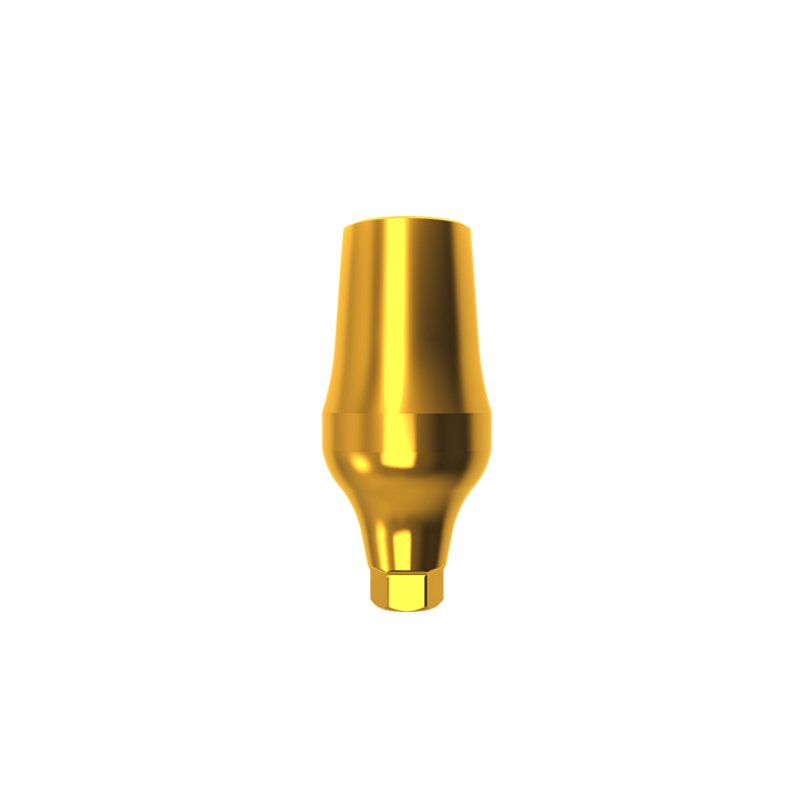
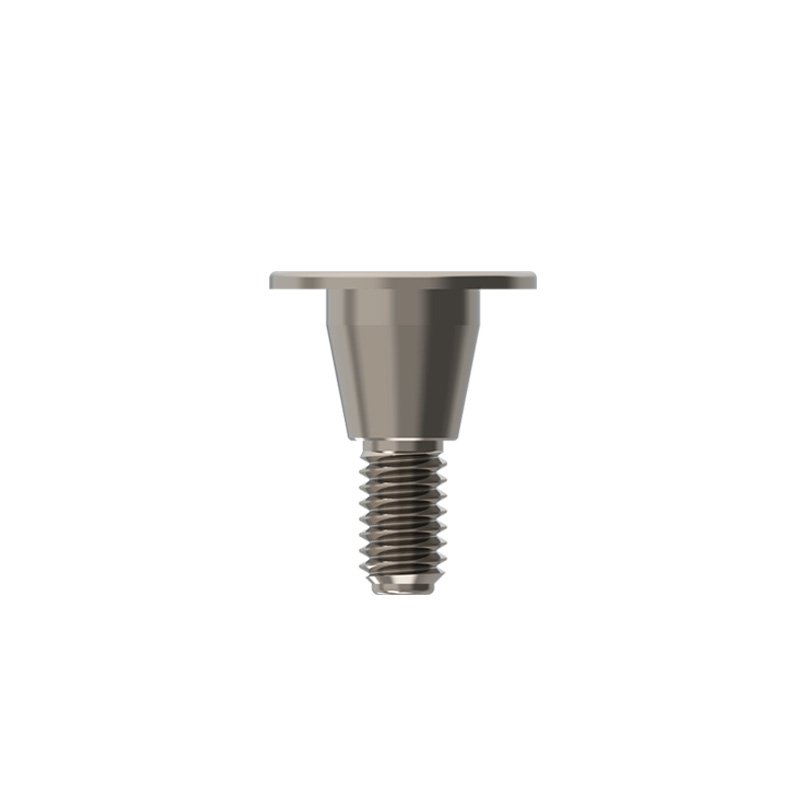
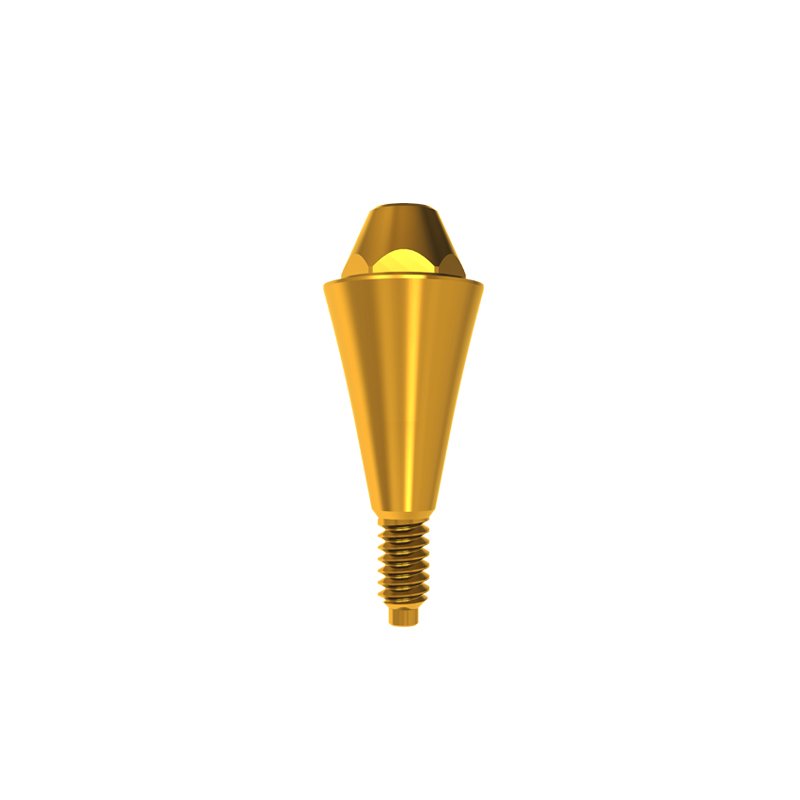
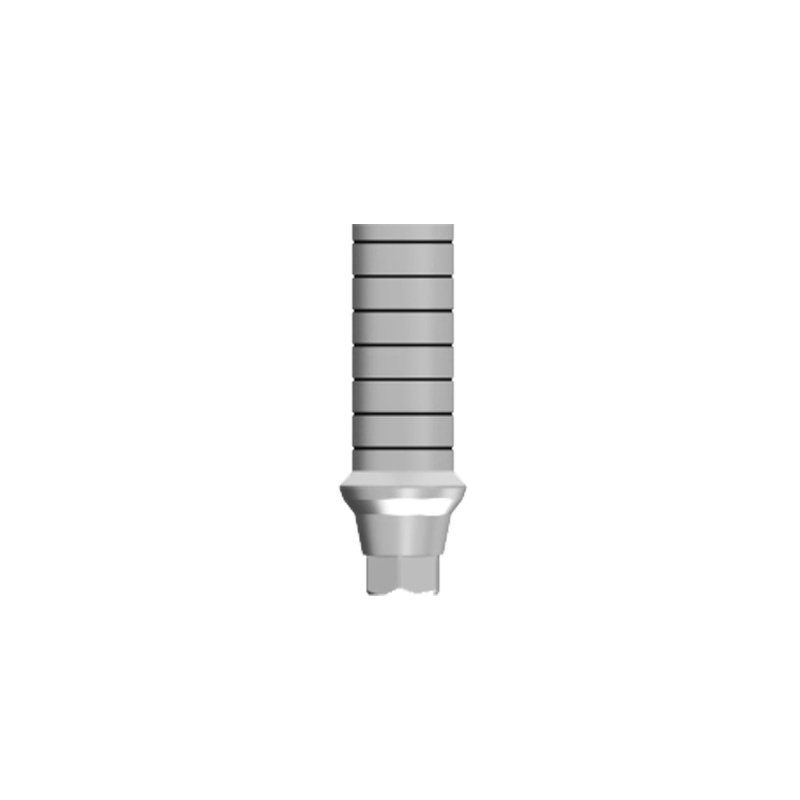
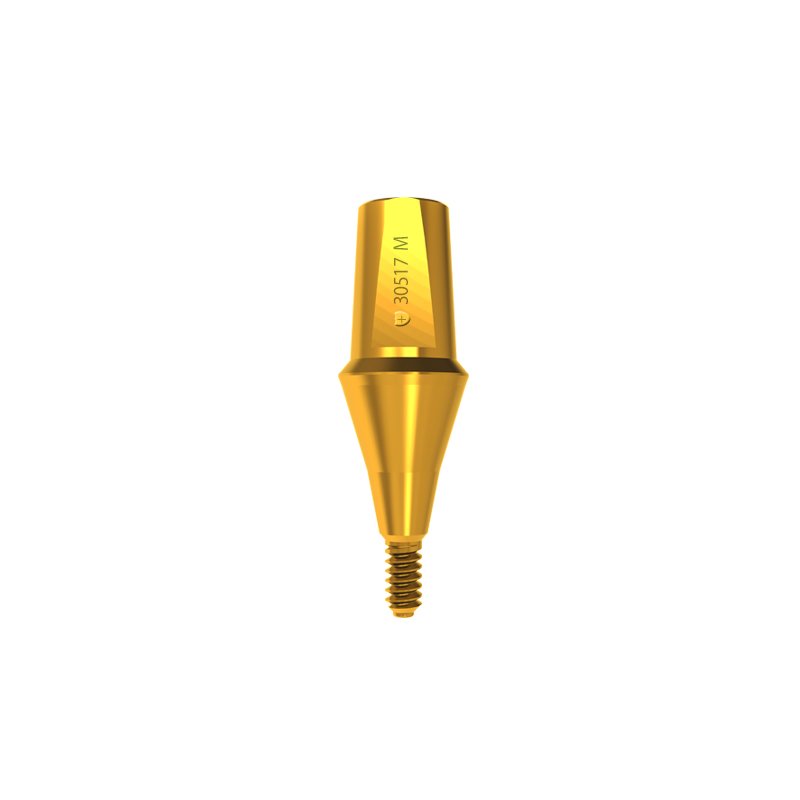
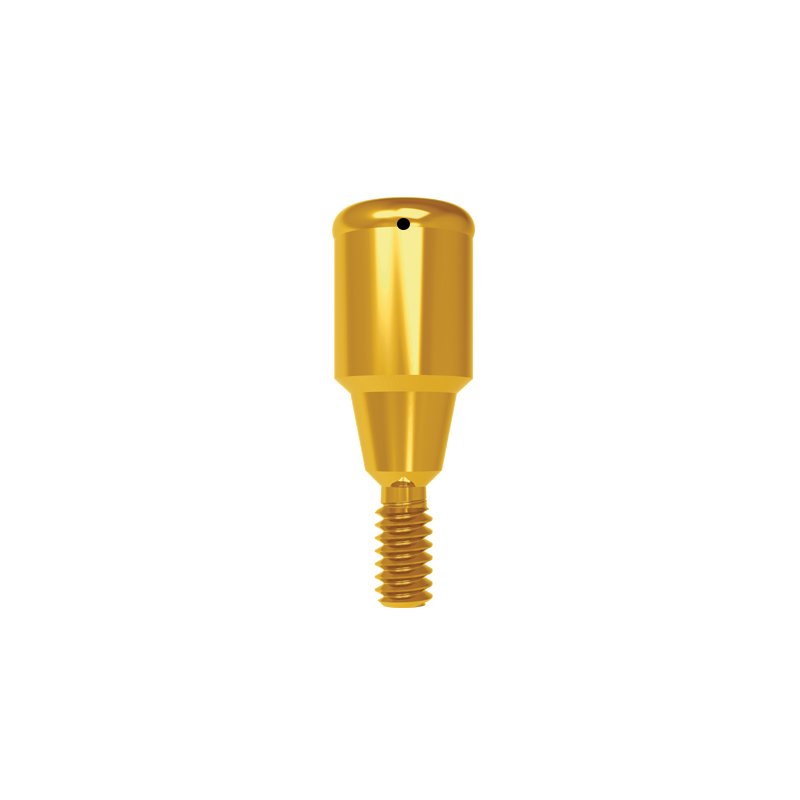
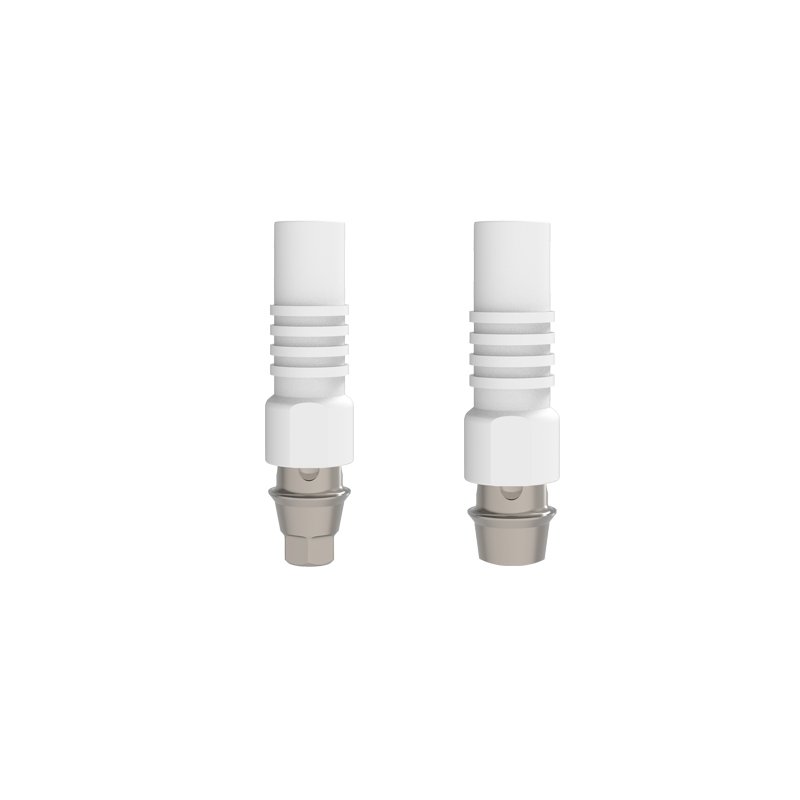
The NTA abutment range covers hex, non-hex, angled, and straight designs in multiple diameters and gingival heights. Components are specified for documented prosthetic indications in implantology, including single-unit and multi-unit restorations. Select the abutment per IFU.
Cementable abutments can be used for single-unit prostheses and multi-unit fixed partial restorations.
Hex driver: 1.2mm
Hex and non-hex options
Tightening torque: 20Ncm (Narrow) – 30Ncm (Regular)
Protective cap: optional
Narrow ( Ø 4.15 – Ø 4.5 ) – Regular ( Ø 4.15 – Ø 4.5 – Ø 5.5 – Ø 6.5 )
Gingival height: 1 – 2 – 3 – 4 – 5 – 6
Height: 4.0 – 5.5 – 7.0
An angled abutment may be used when fixtures cannot be placed parallel to adjacent teeth or implants.
Hex driver: 1.2mm
Hex and non-hex options.
Tightening torque: 20Ncm (Narrow) – 30Ncm (Regular)
Narrow ( Ø 4.5 – Ø 5.5 ) – Regular ( Ø 5.0 – Ø 6.0 )
Gingival height: 1 – 2 – 3 – 4
Height: 7.0
Angle: 7° – 15° – 25°
Specified to support bone and soft-tissue healing around the fixture.
After the healing abutment is placed, gingival healing is typically about 4–6 weeks before the definitive abutment is seated. Follow the IFU for the selected component.
Hex driver: 1.2mm
Tightening torque: 5Ncm – 8Ncm
Narrow ( Ø 4.15 – Ø 4.5 – Ø 5.5 ) – Regular ( Ø 4.15 – Ø 4.5 – Ø 5.5 – Ø 6.5 )
Gingival height: 1 – 2 – 3 – 4 – 5
Height: 2 – 3 – 5 – 7 – 9
Abutment type specified for guided bone regeneration (GBR), immediate loading, and primary stabilization protocols.
GBR
Implant stability
Vertical growth
Immediate implant loading
Narrow ( Ø 5.5 ) – Regular ( Ø 7.2 – Ø 7.6 – Ø 8.1 – Ø 9.0 )
Gingival height: 1 – 3 – 5 – 7
The esthetic abutment is specified for height preparation in single-implant restorations, screw-retained bridges, overdentures, removable dentures, bridges, and bars.
Hex driver: 1.2mm
Straight and angled options
Tightening torque: 20Ncm (Narrow) – 30Ncm (Regular)
Narrow ( Ø 4.0 – Ø 4.5 ) – Regular ( Ø 4.5 – Ø 5.5 – Ø 6.5 )
Gingival height: 1.5 – 2 – 3 – 4
Angle: 7° – 17°

The T-base abutment is used for digital capture of implant position and restorative delivery. Depending on the mesostructure, the abutment cemented to the titanium base can be used as a screw-retained crown.
Hex driver: 1.2mm
Hex and non-hex options
Tightening torque: 20Ncm (Narrow) – 30Ncm (Regular)
Narrow ( Ø 4.5 – Ø 5.5 ) – Regular ( Ø 4.5 – Ø 5.5 )
Gingival height: 1 – 2 – 3
The angled T-base abutment is used for digital capture of implant position and restorative delivery. Depending on the mesostructure, the abutment cemented to the titanium base can be used as a screw-retained crown.
Hex driver: 1.2mm
Hex and non-hex options
Tightening torque: 20Ncm (Narrow) – 30Ncm (Regular)
Narrow ( Ø 4.5 – Ø 5.5 ) – Regular ( Ø 4.5 – Ø 5.5 )
Gingival height: 1 – 2 – 3
Ball abutments are specified for removable dentures. The design allows component replacement and is intended to reduce load transfer to the fixture. Follow the IFU.
Hex driver: 1.2mm
Tightening torque: 20Ncm (Narrow) – 30Ncm (Regular)
Narrow ( Ø 4.5 ) – Regular ( Ø 4.5 )
Gingival height: 1 – 2 – 3 – 4 – 5 – 6
Occlusal screw-retained abutment used to fabricate screw-retained prostheses in bridge cases.
Tightening torque: 20Ncm (Narrow) – 30Ncm (Regular)
Narrow ( Ø 4.8 ) – Regular ( Ø 4.8 )
Gingival height: 1 – 2 – 3 – 4
Pre-mill abutments can be milled to the patient’s tooth and gingival contours as a custom abutment.
Custom abutments are designed and milled by CAD/CAM to the fixture angulation, gingival contour, and adjacent tissues.
Narrow – Regular
Diameter: 10
Height: 20
The milling abutment is a millable abutment that can be customized to the patient’s gingiva.
Hex and non-hex options
Narrow ( Ø 4.5 ) – Regular ( Ø 4.5 – Ø 5.5 – Ø 6.5 )
Gingival height: 2 – 3 – 4
Height: 12
Bone-forming abutment used to protect the bone graft from tongue and salivary fluid.
The bone-forming healing abutment covers the graft with the BF-specific design.
Diameter: Ø 5.0 – Ø 6.0
Gingival height: 1 – 2 – 3
Thickness: Narrow ( 0.4 – 3.0 ) – Regular ( 0.4 – 3.0 )
The multi abutment is specified as a substructure for screw-retained crowns and bridges, hybrid prostheses, and bar attachments. It is also used as a superstructure for provisional and definitive prostheses in immediately loaded full-arch restorations. Follow the IFU.
Hex driver: 1.2mm
Straight and angled options
Tightening torque: 20Ncm (Narrow) – 30Ncm (Regular)
Narrow ( Ø 4.8 ) – Regular ( Ø 4.8 )
Gingival height: 1 – 2 – 3 – 4 – 5
Angle: 17° – 30°
Temporary abutments are used to fabricate a provisional restoration in restorative dentistry.
They provide an attachment point for a crown, bridge, or other restoration while peri-implant tissue heals.
Narrow ( Ø 4.5 ) – Regular ( Ø 4.5 )
Gingival height: 1 – 2 – 3
Height: 8
Temporary abutments are used to fabricate a provisional restoration in restorative dentistry.
They provide an attachment point for a crown, bridge, or other restoration while peri-implant tissue heals.
Narrow ( Ø 4.5 ) – Regular ( Ø 4.5 )
Gingival height: 1 – 2 – 3
Height: 10
The solid abutment is used for cemented abutment prostheses. It is the external connection of the osseointegrated fixture. The one-piece design provides the specified mechanical strength.
Specified for crowns and bridges in anterior and posterior regions.
Hex driver: 1.2mm
Tightening torque: 20Ncm (Narrow) – 30Ncm (Regular)
Protective cap: optional
Narrow ( Ø 4.5 – Ø 5.5 ) – Regular ( Ø 4.5 – Ø 5.5 – Ø 6.5 )
Gingival height: 1 – 2 – 3 – 4 – 5 – 6
Height: 4.0 – 5.5 – 7.0
Tightening torque: 20Ncm (Narrow) – 30Ncm (Regular)
Narrow – Regular
Gingival height: 1 – 1.5 – 2 – 3 – 4 – 5 – 6
Angle: 15°
The UCLA abutment is a castable abutment supplied with a machined base in titanium, cobalt-chromium, or gold alloys. It can be used for single- or multi-unit restorations.
Hex driver: 1.2mm
Hex and non-hex options
Tightening torque: 20Ncm (Narrow) – 30Ncm (Regular)
Narrow ( Ø 4.2 ) – Regular ( Ø 4.2 )
Use the form for product, library, or protocol questions. The clinical support team will reply.