Machined cuff for gingival adaptation
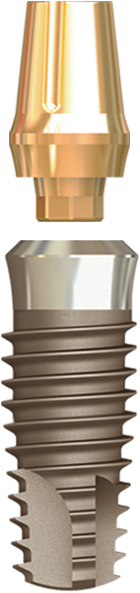
NTA Tissue Level is a tissue-level fixture with an SLA-treated endosseous surface and a machined gingival cuff. Connection is an 8° taper with an internal octagon index. Dual-thread geometry (0.8 mm pitch, 0.45 mm depth, 1.5° body taper) is specified for primary stability. Placement and restoration follow the IFU.
The Tissue Level fixture has an SLA endosseous surface and a machined cuff specified for bone and soft-tissue contact.
Machined cuff: A turned neck for gingival adaptation and plaque control at the soft-tissue level.
Macro and micro roughness: Titanium is corundum-blasted and acid-etched in a heated HCl solution, producing 2–4 μm pits intended to support osseointegration.
Non-porous finish: The surface is not micro-porous, so closed recesses for bacterial colonization are not created.
Surface chemistry: XPS of the chemical surface confirms titanium dioxide (TiO2).
Connection specified for a precise implant–abutment seat:
8° conical connection: Specified to reduce stress at the fixture and limit micro-movement and micro-leakage at the interface.
Internal octagon index: Indexes the abutment so it seats at the specified angle.
1.5° body taper: Dual-thread screw (0.8 mm pitch, 0.45 mm depth) specified for primary stability in softer bone when the osteotomy follows the IFU.
Placement and handling features:
Self-tapping: Specified to increase primary stability when bone quality or volume is limited. A sharp cutting edge supports self-tapping in the osteotomy.
Rounded apex: Intended to reduce tissue trauma when the fixture is placed toward the maxillary sinus, per IFU.
Root form and body: Intended for the insertion path and primary stability, reducing contact with adjacent roots.
Cutting edges: Osteotomy is prepared with three-edged burs. Frictional heat and insertion trauma stay low when the sequence in the IFU is followed.
Mount-free: Placed with a dedicated fixture driver specified for a secure grip and release. No mount component.

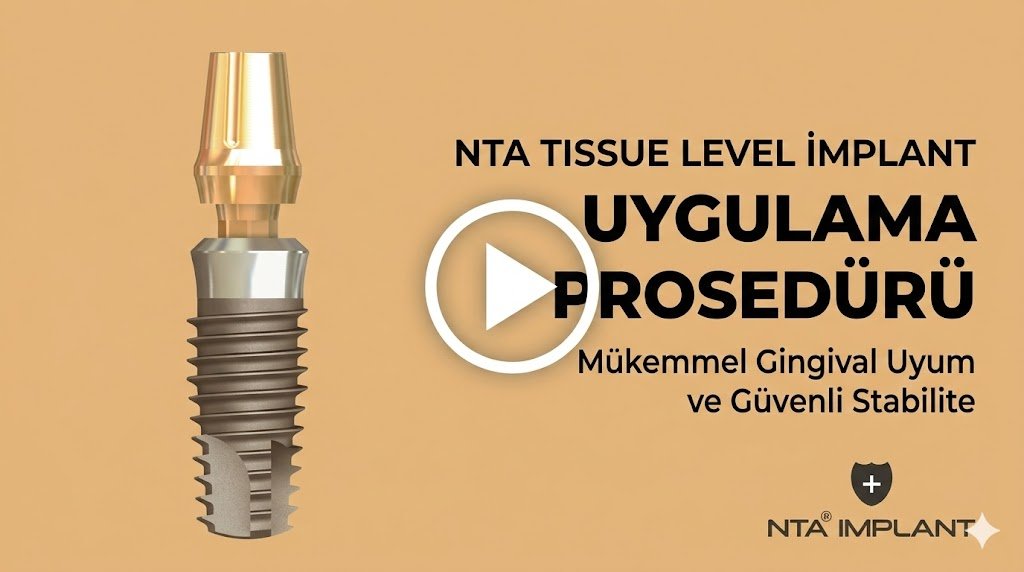
Video of the osteotomy and placement sequence. Follow the IFU.
Use the form for product or protocol questions. The clinical support team will reply.